The Ultimate Guide to Identifying and Fixing HDB Roof Leaks in 2026
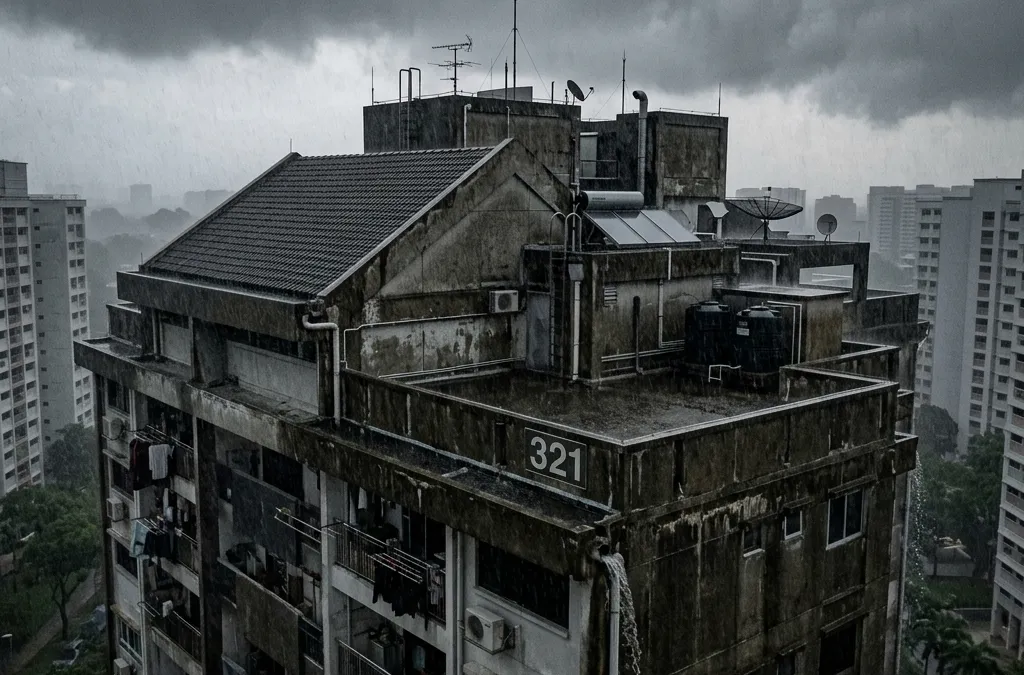
Introduction to HDB Roof Leaks
Inter-floor and roof leaks are among the most common and frustrating issues for HDB flat owners in Singapore. Living in a tropical climate means our buildings are constantly battered by heavy monsoon rains, intense heat, and high humidity. Over time, these harsh environmental elements cause inevitable wear and tear on roofing materials, concrete floor slabs, and internal waterproofing membranes.
Addressing these leaks promptly is absolutely essential to prevent severe structural damage, unhygienic mold growth, and escalating repair costs. What begins as a small, seemingly harmless water stain today can rapidly evolve into a major structural hazard, complete with falling concrete and short-circuited electrical wiring. Furthermore, for homeowners, dealing with a ceiling leak isn’t solely about fixing the physical damage to the property—it’s also about managing the stress of potential disputes with neighbors and navigating the intricate rules and guidelines set by the Housing & Development Board (HDB).
In this comprehensive, no-nonsense guide, we will break down everything you need to know about HDB roof leaks in 2026. We will cover the early warning signs you should never ignore, clarify the legal repair responsibilities between you and the Town Council, break down current repair costs, explain standard contractor procedures, and provide actionable long-term prevention strategies to protect your home.
Early Warning Signs
Do not wait for water to start physically dripping onto your expensive furniture, flooring, or electronics. By the time water is visibly dripping from your ceiling, the internal concrete slab and the steel reinforcement bars within it may have already sustained significant water damage. Look out for these critical early indicators:
- Water Stains: Yellowish, brown, or dark discolored rings on your ceiling or upper walls. These stains often expand and darken slightly after heavy rain, or when the neighbor directly above you takes a shower or washes their floor.
- Peeling Paint and Blistering Plaster: Moisture trapped behind the paint causes it to lose its adhesion to the wall. You might observe the paint bubbling, flaking, or peeling off entirely in sheets, leaving the raw plaster exposed.
- Musty Odors: A persistent, damp, “wet dog” smell in a specific room (usually the bathroom or kitchen) indicates trapped, stagnant moisture. This is often the very first sign of hidden mold and mildew growth, which can trigger severe respiratory issues and allergies for your family.
- Damp Patches: Concrete that feels unusually cold, damp, or clammy to the touch, even when the rest of the room is warm and dry.
- Efflorescence: White, chalky, powdery streaks or deposits forming on the ceiling or walls. This occurs when water seeps through the concrete slab, dissolving natural mineral salts and leaving them deposited on the surface as the water eventually evaporates.
- Cracked or Spalling Concrete: In severe, prolonged cases, trapped moisture causes the internal steel reinforcement bars (rebar) to rust and expand. This expansion forces the surrounding concrete to crack, bulge, and eventually fall off in chunks. This is a highly dangerous structural condition known as spalling concrete and requires immediate professional intervention.
When to Call the Town Council vs. a Private Contractor
Understanding who is legally and financially liable for the repair responsibilities is crucial to resolving the issue swiftly. HDB rules dictate specific jurisdictions depending on exactly where the leak originates. Here is a clear, simple breakdown to help you decide your immediate next steps.
The Decision Table
| Source of Leak | Description | Who is Responsible? | Who to Contact |
|---|---|---|---|
| Top-Floor Main Roof | Water leaking from the ceiling of the highest floor unit directly beneath the building’s main RC roof. | Town Council | Town Council |
| External Building Walls | Rainwater seeping through the external, facade structural walls of the HDB block into your living room or bedroom. | Town Council | Town Council |
| Inter-Floor (Wet Areas) | Water leaking from the ceiling directly beneath a neighbor’s bathroom, toilet, or kitchen. | Upper & Lower Flat Owners (50-50 Split) | Private Waterproofing Contractor / HDB |
| Internal Pipes | Leaking concealed water supply pipes located within the internal walls of a specific unit. | The specific unit owner where the pipe is located | Private Plumber / Contractor |
| Window Frames | Rainwater seeping in through the gaps, seals, or tracks around your own unit’s window frames. | The unit owner | Private Window Contractor |
Main Roof and External Walls
If you live on the top floor and the leak originates from the building’s main concrete roof, or if rainwater is actively seeping through the external structural walls into your home during a storm, the Town Council is generally responsible for the repairs. These areas are classified as common property. You should immediately lodge a maintenance report with your respective Town Council. They will dispatch their designated term contractors to inspect the area and repair the roof membrane or seal the external facade cracks.
Inter-Floor Leaks (Toilet/Kitchen)
If the leak is originating from the unit directly above yours—most commonly occurring in wet areas like the bathroom, toilet, or kitchen—HDB regulations clearly stipulate that both the upper and lower floor owners must share the repair responsibilities and the associated costs on an equal 50-50 basis. This is because the concrete floor slab separating the two units is considered a shared boundary.
In these situations, your first step is to communicate amicably with your upstairs neighbor to inform them of the leak. If relations are good, you can jointly hire a private contractor of your choice to quickly assess and fix the issue.
If your neighbor is uncooperative, denies responsibility, or refuses to pay, you can approach HDB for assistance under the Goodwill Repair Assistance (GRA) scheme. Under the GRA, HDB will arrange for their term contractors to carry out the repair, and HDB will generously co-pay 50% of the repair cost, leaving the remaining 50% to be shared equally between you and your neighbor. However, be warned: the GRA scheme only covers specific, basic repair methods, and the administrative process—including mandatory investigations and mediating between uncooperative neighbors—can take several months. If you need an immediate, high-quality fix to prevent extensive damage to your custom carpentry or expensive furniture, hiring a private contractor directly is highly recommended.
Effective Repair Methods
Depending on the exact source, severity, and specific location of the leak, several professional repair methods can be deployed.
1. Polyurethane (PU) Injection Grouting
This is currently the most popular, cost-effective, and minimally invasive “no-hacking” method available in Singapore. When a leak occurs due to hairline cracks in the concrete slab, specialized PU resin is injected directly into these cracks from the ceiling of the affected lower unit under extremely high pressure. When the liquid PU resin comes into physical contact with the water trapped inside the crack, it undergoes a rapid chemical reaction and expands up to 30 times its original volume. This forms a dense, waterproof, and flexible foam that completely seals the internal void, stopping the water ingress permanently.
- Pros: Highly efficient (often completed in a few hours), relatively clean, absolutely no hacking required, and the upper neighbor’s floor tiles remain completely untouched.
- Cons: It only seals the specific cracks that are injected. If the upper floor’s underlying waterproofing membrane is entirely degraded, water may eventually pool and find a new path down the line.
2. Clear Penetrating Waterproofing (Non-Hacking)
This method is applied directly over the existing tiles in the upper unit’s bathroom or kitchen. A specialized, highly penetrative chemical solution is flooded over the entire floor area. It seeps deeply into the porous grout lines, the microscopic pores of the tiles, and any hairline surface cracks. Once cured, it forms a transparent, robust waterproof barrier without altering the visual appearance or texture of the floor.
- Pros: Very cost-effective, incredibly fast to apply, and completely eliminates the noise, dust, and disruption associated with heavy hacking.
- Cons: Generally less durable than a full hacking replacement. It relies heavily on the existing tiles and grout being in relatively good, stable structural condition.
3. Full Hacking and Re-Waterproofing
This is the traditional, most thorough, and undoubtedly the most disruptive method available. This process involves completely hacking away the floor tiles and the underlying cement screed of the upper unit’s wet area to expose the bare concrete structural slab. A new, heavy-duty waterproofing membrane (such as liquid polyurethane or a highly flexible cementitious waterproofing compound) is applied in multiple thick layers. Once the new membrane passes a strict ponding test (flooding the entire area with water for 24-48 hours to rigorously check for any hidden leaks), a new protective screed is laid, and fresh aesthetic tiles are installed.
- Pros: The ultimate, definitive long-term solution. It completely resets the lifespan of the bathroom’s waterproofing system.
- Cons: Very expensive and highly disruptive. It generates significant dust, noise, and debris, takes several days to complete, and the bathroom cannot be used at all during this period.
How Much Does HDB Roof Leak Repair Cost in Singapore? (2026)
Cost is understandably the biggest concern for most homeowners. While final prices will naturally fluctuate based on the specific contractor chosen, the severity of the water damage, and the exact dimensions of the affected area, here are the prevailing, accurate market rates in Singapore for 2026:
- PU Injection Grouting: Expect to pay between $300 to $800. The cost scales depending on the total length and the number of injection points required. A single, localized wet spot will sit on the lower end, while multiple branching cracks spreading across a large living room ceiling will cost significantly more.
- Clear Penetrating Waterproofing: This non-invasive treatment typically ranges from $500 to $1,200 per bathroom, largely dependent on the total floor area.
- Full Hacking and Re-Waterproofing: This qualifies as major renovation work. Prices generally fall between $2,500 to $6,000 per bathroom. The high cost accounts for the intensive manual labor required for demolition, the logistical challenge of safely disposing of heavy concrete debris from a high-rise HDB block, the cost of premium waterproofing membranes, the mandatory 24-hour ponding test, and the labor and materials required for laying the new screed and tiles.
Note for Inter-Floor Leaks: Remember that under standard HDB guidelines, the cost of repairing inter-floor leaks is split 50-50 between the upper and lower flat owners. For example, a $600 PU injection job means each neighbor is legally obligated to pay $300.
Step-by-Step: What Happens When You Call a Contractor
Dealing with a sudden leak is highly stressful, but understanding the professional repair process can give you clarity and peace of mind. Here is exactly what happens step-by-step when you engage a reputable, licensed contractor like Asia Tech Roofing:
Step 1: Free Site Inspection
A certified roofing and waterproofing technician will visit your home at a scheduled, convenient time. If it is an inter-floor leak, they will ideally request to inspect both the lower unit’s affected ceiling and the upper unit’s floor to gain a comprehensive, accurate picture of the problem.
Step 2: Moisture Detection with Specialized Tools
Professional contractors do not just rely on visual checks and guesswork. They will utilize advanced diagnostic tools such as thermal imaging cameras to clearly see temperature variations caused by hidden water pooling inside the slab, and digital moisture meters to accurately measure the exact dampness levels within the concrete. This ensures the true root cause is identified, not just the visible symptom.
Step 3: Written Assessment and Quotation
Following the thorough inspection, you will receive a detailed written report outlining the findings, the recommended repair method (e.g., explaining why PU grouting is preferred over hacking in your specific case), and a transparent, itemized quotation. There should be absolutely no hidden fees or high-pressure obligation to proceed.
Step 4: Work Execution
Once you accept the quotation and terms, a date is firmly set for the repairs.
- For PU Grouting: The team will arrive, lay down extensive protective plastic sheets over your furniture and flooring, drill small injection ports directly into the ceiling cracks, inject the expanding resin, carefully clean up any excess foam extrusion, and patch the ceiling to leave it looking neat. This entire process usually takes just half a day.
- For Hacking: The process will take a grueling 3 to 5 days, involving loud, heavy hacking, coordinated debris removal, membrane application, overnight ponding tests, and precision re-tiling.
Step 5: Post-Work Warranty
A reliable, established contractor will always stand behind their work. Upon completion, you will receive a formal, written warranty document covering the repaired area. If the leak miraculously recurs within the specified warranty period, the contractor is contractually obligated to return and rectify the issue at absolutely no additional cost to you.
How to Prevent Future HDB Leaks
While some degree of wear and tear is inevitable over decades, proactive maintenance can significantly extend the lifespan of your property’s waterproofing and save you thousands of dollars in emergency repairs.
- Annual Visual Inspections: Make it a strict habit to check your ceilings and walls once a year, particularly after the heavy monsoon season (December to January). Catching a small yellowish water stain early is exponentially cheaper than dealing with rusted rebar and spalling concrete later.
- Maintain Bathroom Grout: The cement grout lines between your bathroom tiles naturally degrade, crack, and wash away over time due to harsh acidic cleaning chemicals and daily water flow. Re-grout your bathroom floor tiles every 3 to 5 years. Intact, sealed grout acts as the critical first line of defense, preventing surface water from ever reaching the vulnerable waterproofing membrane beneath.
- Clear Floor Traps Regularly: Blocked floor traps in toilets, kitchens, or balconies cause water to pond and accumulate. Standing water puts immense hydrostatic pressure on the waterproofing membrane, severely accelerating its deterioration. Ensure water drains quickly and smoothly.
- Use Waterproof Paint: For high-humidity areas like kitchens and bathrooms, consider using specialized anti-mold and waterproof paints on the ceilings and upper walls. These advanced paints create a vapor barrier that heavily resists moisture penetration.
- Avoid Harsh Acid Wash: When cleaning your bathroom floor, strictly avoid strong acidic cleaners or harsh chemical bleaches. These acids aggressively eat away at the tile grout and can easily damage the underlying waterproofing membrane if they manage to seep through. Stick to mild, pH-neutral bathroom detergents.
Conclusion
Dealing with HDB roof and ceiling leaks requires patience, active cooperation with your neighbors, and relying on professional expertise. Ignoring a small leak will only lead to far more extensive structural degradation, severe health issues stemming from toxic mold, and rapidly spiraling repair costs.
By clearly understanding your legal responsibilities, knowing the various repair options available in the market, and maintaining a proactive approach to your home’s maintenance, you can effectively protect your property investment and ensure a safe, completely dry living environment for your family. Always engage a certified, licensed waterproofing specialist to conduct a proper diagnostic assessment and recommend the most effective, long-lasting solution tailored specifically to your unique situation.
Need a professional assessment? Book a free on-site inspection with Asia Tech Roofing. Our team of BCA-certified experts is ready to rapidly diagnose and permanently resolve your leak issues.
Frequently Asked Questions
Q: Is the Town Council or the flat owner responsible for top-floor HDB leaks? A: If you live on the highest floor and water is leaking directly from the main roof slab, the Town Council is entirely responsible for the repairs. However, if the leak occurs between two residential floors, it is the joint responsibility of both flat owners.
Q: Who bears the cost for an HDB roof leak repair? A: If it’s a Town Council issue, you do not pay anything as they cover the exterior roof maintenance. For inter-floor leaks handled privately, no-hacking PU injection methods are highly cost-effective and the expense is usually split equally between the affected neighbors.
Q: How long does a typical leak repair take? A: Advanced no-hacking methods like PU injection grouting are very fast and can usually be completed in 2 to 4 hours. Traditional hacking and relaying of waterproof membranes can take anywhere from 3 to 7 days, causing significant disruption.
Q: What should I do while waiting for the repair contractor? A: Place buckets or heavy-duty plastic sheets under the leak to protect your flooring and furniture. Do not attempt to seal the crack yourself with temporary tape or putty, as this can trap moisture and complicate the professional repair process later.
Need immediate assistance with a ceiling leak? Contact our HDB leak repair specialists today for a free moisture detection assessment.