Ceiling Water Stains: Causes, Risks, and Permanent Fixes
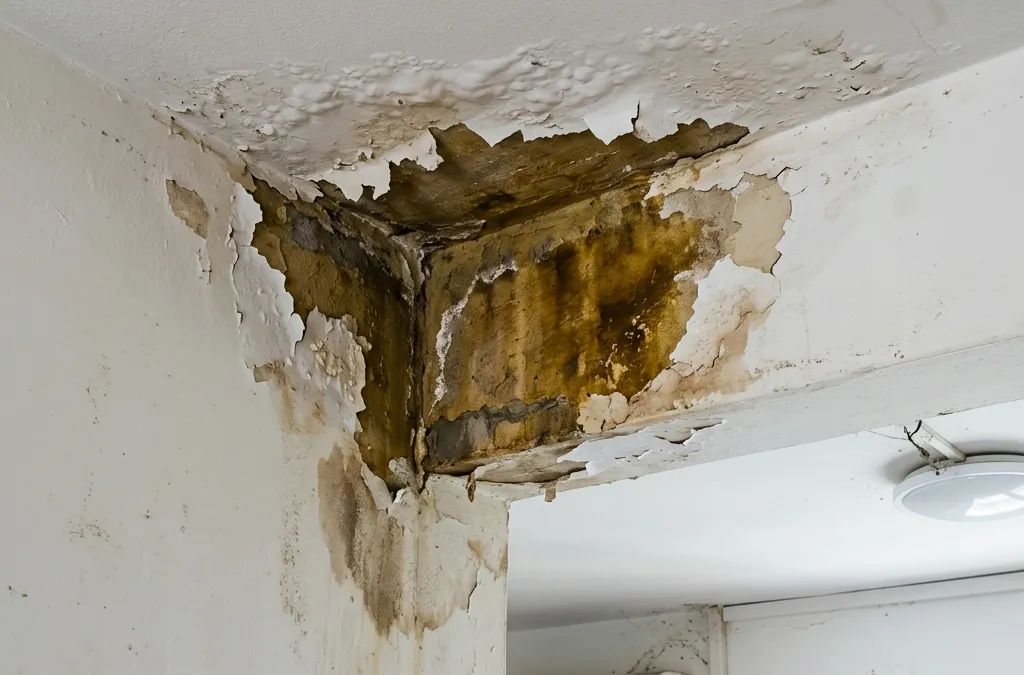
You walk into your living room, look up, and there it is—an unsightly, yellowish-brown ring expanding across your pristine white ceiling.
Ceiling water stains are one of the most common complaints among homeowners in Singapore. Whether you reside in a mature HDB flat requiring roof repair in Tampines or a landed property in Bukit Timah, these stains are never just a cosmetic issue. They are the undeniable footprints of a hidden, active leak.
In this guide, we explore the primary causes of ceiling water stains in Singapore, the hidden dangers they pose if ignored, and the most effective, permanent repair methods.
What Causes Ceiling Water Stains?
A ceiling stain forms when water infiltrates your property’s structure, dissolves minerals and salts within the building materials, and subsequently evaporates on the surface of your ceiling, leaving a discolored residue behind.
In Singapore, the common culprits include:
- Inter-Floor Leaks (HDB & Condos): This is the most frequent cause in high-rise buildings. If the stain is located directly beneath your upstairs neighbor’s bathroom or kitchen, their waterproofing membrane or tile grout has likely failed. Water from their daily showers is seeping down through the shared concrete slab into your ceiling.
- Main Roof Leaks: If you live on the highest floor, a stain indicates a failure in the building’s main concrete roof membrane or a cracked pitched roof tile allowing rainwater to penetrate.
- Plumbing Failures: A leaking concealed water supply pipe or a compromised air-conditioning drainage pipe running through the false ceiling can produce rapid, dark staining.
- Condensation: In rare cases, extremely poor ventilation combined with cold air-conditioning pipes can cause condensation to build up on the drywall or plaster, leading to localized damp spots.
The Hidden Dangers of Ignoring a Stain
Many homeowners make the critical mistake of assuming that a small stain is a minor issue that can be dealt with later. Unfortunately, by the time a stain is visible to the naked eye, the internal concrete slab has likely been saturated with water for weeks, if not months.
- Spalling Concrete: Continuous moisture exposure causes the steel reinforcement bars (rebar) inside the concrete slab to rust. As the steel rusts, it expands up to seven times its original volume, forcing the surrounding concrete to crack and break off in heavy chunks.
- Toxic Mold Growth: A damp, dark environment inside the ceiling is the perfect breeding ground for toxic black mold. This can trigger severe allergic reactions, asthma, and respiratory issues for your family.
- Electrical Hazards: Water and electricity are a lethal combination. If the leak reaches concealed wiring or light fixtures, it can cause short circuits and significantly increase the risk of an electrical fire.
Why You Should Never Just “Paint Over” It
The temptation to simply buy a can of stain-blocking primer and paint over the ugly yellow ring is strong. However, this is the worst possible action you can take.
Painting over a stain is equivalent to putting a band-aid on a broken arm. The primer might hide the discoloration temporarily, but it also traps the active moisture inside the concrete slab. Because the water can no longer easily evaporate through the ceiling surface, it accelerates the rusting of the internal rebar, guaranteeing that spalling concrete will develop much faster.
How to Fix a Ceiling Water Stain Permanently
To permanently eliminate a ceiling stain, you must first eliminate the source of the water.
Step 1: Diagnose the Source
Engage a professional waterproofing contractor to conduct a thorough inspection. At Asia Tech Roofing, we utilize advanced thermal imaging cameras and digital moisture meters to trace the moisture trail back to its exact origin, eliminating the guesswork.
Step 2: Stop the Leak
Once the source is identified, the leak must be stopped.
- For Inter-Floor Leaks: We highly recommend PU Injection Grouting. This fast, no-hacking method involves injecting an expanding polyurethane resin directly into the ceiling cracks from your unit. The resin expands upon contact with water, completely sealing the void and preventing further water ingress.
- For Top-Floor Leaks: If the issue originates from the main roof, the external waterproofing membrane will need to be repaired or replaced—a cost typically covered by the Town Council for HDB residents.
If you are unsure about the HDB regulations regarding repair costs and neighbor mediation, be sure to read our Ultimate Guide to HDB Roof Leaks for a complete breakdown of the 50-50 co-payment rules.
Step 3: Repair the Ceiling
Only after the leak has been professionally sealed and the concrete slab has been given adequate time to dry should you repair the cosmetic damage. Once completely dry, the stained plaster can be scraped away, a stain-blocking primer applied, and the ceiling repainted to look brand new.
Stop the Leak Before It Spreads
A ceiling stain is your home’s early warning system. If you spot a yellowish ring forming above your head, act quickly to minimize the repair costs and protect your property’s structural integrity.
Our team at Asia Tech Roofing is ready to help. We provide rapid diagnostic services and permanent, warranty-backed solutions across Singapore.
Contact us today for a free on-site inspection and let our certified specialists resolve your ceiling leak for good.
Common Questions
Can I just paint over a ceiling water stain?
No. Painting over a water stain without fixing the underlying leak will only trap moisture. The stain will reappear within days, and the trapped moisture will accelerate concrete spalling.
Is a yellowish ceiling stain dangerous?
While the stain itself is just discoloration, it indicates active water pooling inside the concrete slab. Left untreated, this leads to rusted rebar, spalling concrete, and mold growth.
Who is responsible for a ceiling stain in an HDB flat?
If the stain is beneath a neighbor's bathroom or kitchen, it is considered an inter-floor leak, and HDB regulations dictate a 50-50 cost split for the repair between the upper and lower units.