How to Fix Roof Leakage in HDB: Step-by-Step Responsibility Guide
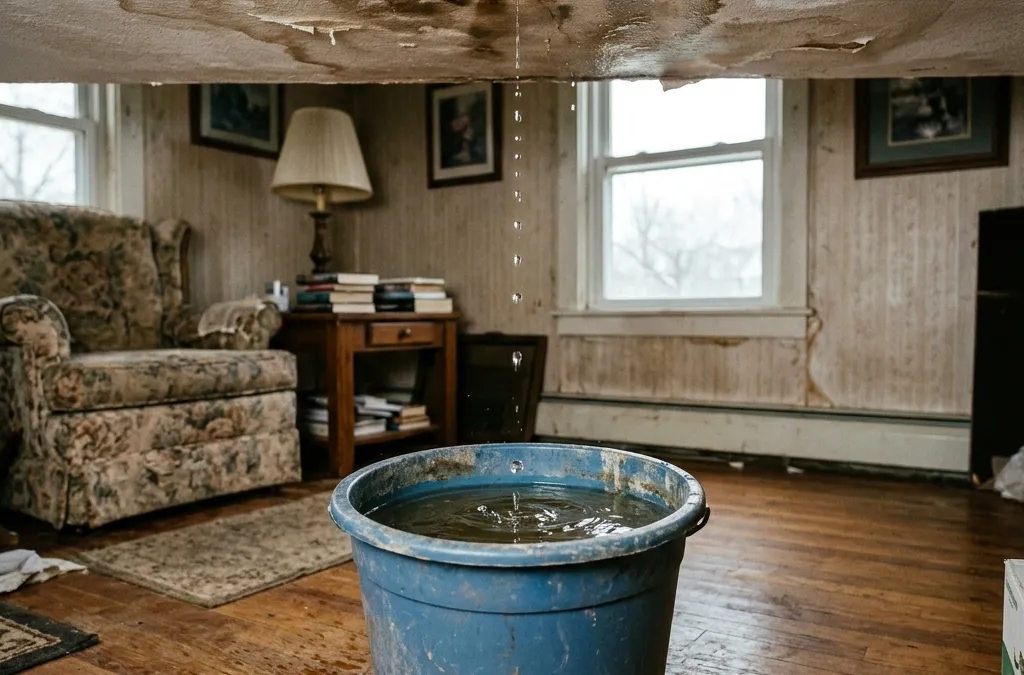
Solving HDB Ceiling Leaks
If there’s one call we get almost every single day at Asia Tech Roofing, it’s from a panicked homeowner dealing with an HDB ceiling leak. Inter-floor leaks and top-level ceiling leaks are incredibly common in Singapore’s aging high-rise flats.
When our team arrives on site, the crucial first step is always diagnostics: is this a top-floor main roof leak or a mid-floor bathroom leak originating from the neighbor’s unit directly above? Getting this right dictates everything that follows.
Who is Responsible?
In our 20 years of experience, we’ve found that understanding financial liability upfront saves incredible amounts of time and prevents nasty disputes between neighbors:
- Inter-Floor Leaks (Toilet/Kitchen): HDB regulations are clear here. For a leak between two flats, both the upper and lower unit owners share the repair responsibilities. We usually see neighbors split the bill 50/50.
- External and Main Roof Leaks: If we determine the leak is coming from the external facade wall or the main roof of your block, you won’t have to pay a dime. The Town Council is entirely responsible for these repairs.
The Traditional Hacking Method
Years ago, fixing a severe bathroom floor leak meant one thing: hacking. We would have to hack up all the floor tiles of the upper unit, apply a new cementitious waterproofing membrane to the bare concrete, and re-tile the entire bathroom. We rarely recommend this today because it’s highly disruptive, incredibly noisy, dusty, and takes over a week to complete. Your neighbors won’t be happy, and neither will you.
The Modern No-Hacking Solution We Use: PU Injection Grouting
Today, our team overwhelmingly favors Polyurethane (PU) Injection for concrete slab leaks. It’s what we use for 90% of our inter-floor HDB repairs.
- How we do it: We perform the repair entirely from the lower unit. Our technicians drill small, precise holes into your ceiling near the leak source. We then inject liquid PU resin under high pressure. When the resin hits the hidden water inside the concrete cracks, it reacts and expands rapidly into a dense foam, completely sealing the cracks from the inside out.
Why We Always Recommend PU Injection
- Cost-Effective: It is significantly cheaper than full hacking and re-tiling.
- Lightning Fast: Our crews usually wrap up the entire repair within a few hours.
- Clean & Quiet: Minimal dust, noise, and disruption. You won’t have to vacate your home, and you won’t ruin relations with your upstairs neighbor.
What Happens During Our Site Visit
When you call us for an HDB ceiling leak, we don’t just guess where the water is coming from. We follow a strict, professional diagnostic protocol:
- Visual Assessment: We start by thoroughly inspecting the water stains on your ceiling. We look at the color, the spread, and whether the paint is bubbling or peeling.
- Thermal Imaging and Moisture Meters: We deploy advanced thermal imaging cameras to scan the ceiling. This allows us to “see” hidden water pooling inside the concrete slab. We also use digital moisture meters to get precise dampness readings.
- Upper Floor Inspection (If Applicable): For inter-floor leaks, we ideally need to visit your upstairs neighbor. We will conduct a water ponding test or a color dye test in their bathroom to definitively prove if their floor waterproofing has failed.
- Transparent Quotation: Once we pinpoint the exact source, we sit down with you (and your neighbor, if it’s a shared cost) to explain our findings and provide a transparent, itemized quotation for the PU injection.
Method Breakdown for HDB Leak Repair in Singapore
If you are dealing with an inter-floor leak, cost-efficiency and disruption are always major concerns. Here is a clear comparison of the two main repair methods:
| Repair Method | Cost Efficiency | Disruption & Timeline | Who Usually Pays? |
|---|---|---|---|
| PU Injection Grouting (No-Hacking) | Highly Affordable | Very low dust/noise. Takes 2 to 4 hours. | 50/50 split between upper and lower owners. |
| Traditional Hacking & Re-tiling | High Investment | Extremely noisy, dusty. Takes 5 to 7 days. | 50/50 split, but often heavily contested. |
Because PU Injection is highly effective and generally much more affordable, it is incredibly rare for us to recommend traditional hacking unless the concrete slab is severely compromised by advanced spalling (concrete cancer).
How to Prevent Future HDB Leaks
As a homeowner, there are proactive steps you can take to protect your flat from severe water damage:
- Maintain Bathroom Grout: The cement grout between your bathroom floor tiles is your first line of defense. Harsh chemical cleaners erode this grout over time. Re-grout your bathroom floors every 3 to 5 years to stop water from reaching the waterproof membrane beneath.
- Avoid Acidic Cleaners: Stop using harsh acidic washes or heavy bleach on your toilet floors. These chemicals actively eat through tile grout and eventually destroy the waterproofing membrane. Stick to mild, pH-neutral detergents.
- Clear Floor Traps: Ensure your bathroom and kitchen floor traps are clear of hair and debris. Standing, pooling water puts massive hydrostatic pressure on the floor slab, forcing water into microscopic cracks.
- Inspect Annually: Keep an eye on your ceilings, especially right after the heavy monsoon seasons. Catching a small yellowish stain early means a cheap PU injection job, rather than dealing with rusted rebar and spalling concrete later.
Need immediate assistance with a ceiling leak? Contact our HDB leak repair specialists today for a free moisture detection assessment.
Frequently Asked Questions
Q: Who pays for an inter-floor HDB leak repair? A: Under HDB guidelines, the cost of repairing an inter-floor leak is shared equally (50/50) between the upper and lower floor flat owners. However, if the leak is caused by recent renovations on the upper floor, that owner typically bears the full cost.
Q: How long does PU injection grouting last? A: When applied correctly by professionals, PU injection grouting is a highly durable solution that can last anywhere from 5 to 10 years. It actively expands to fill all microscopic voids, making it incredibly resilient against future water seepage.
Q: Can I fix an HDB ceiling leak myself? A: We do not recommend DIY fixes for HDB leaks. Over-the-counter sealants rarely address the root cause deep within the concrete slab and often fail within months. Professional diagnostic tools and high-pressure injection pumps are required for a permanent fix.
Q: Is PU injection cost-effective for an HDB flat? A: Yes, for a standard HDB bathroom or ceiling leak, PU injection grouting is highly cost-effective compared to traditional hacking methods. The final price depends on the length of the crack and the volume of polyurethane resin required to fully seal the void.
Get Expert Help
Dealing with a roof issue in Singapore? Asia Tech Roofing provides free on-site inspections with no obligation. Book your free inspection →
For detailed cost breakdowns and repair processes, see our Complete HDB Roof Leak Guide.